
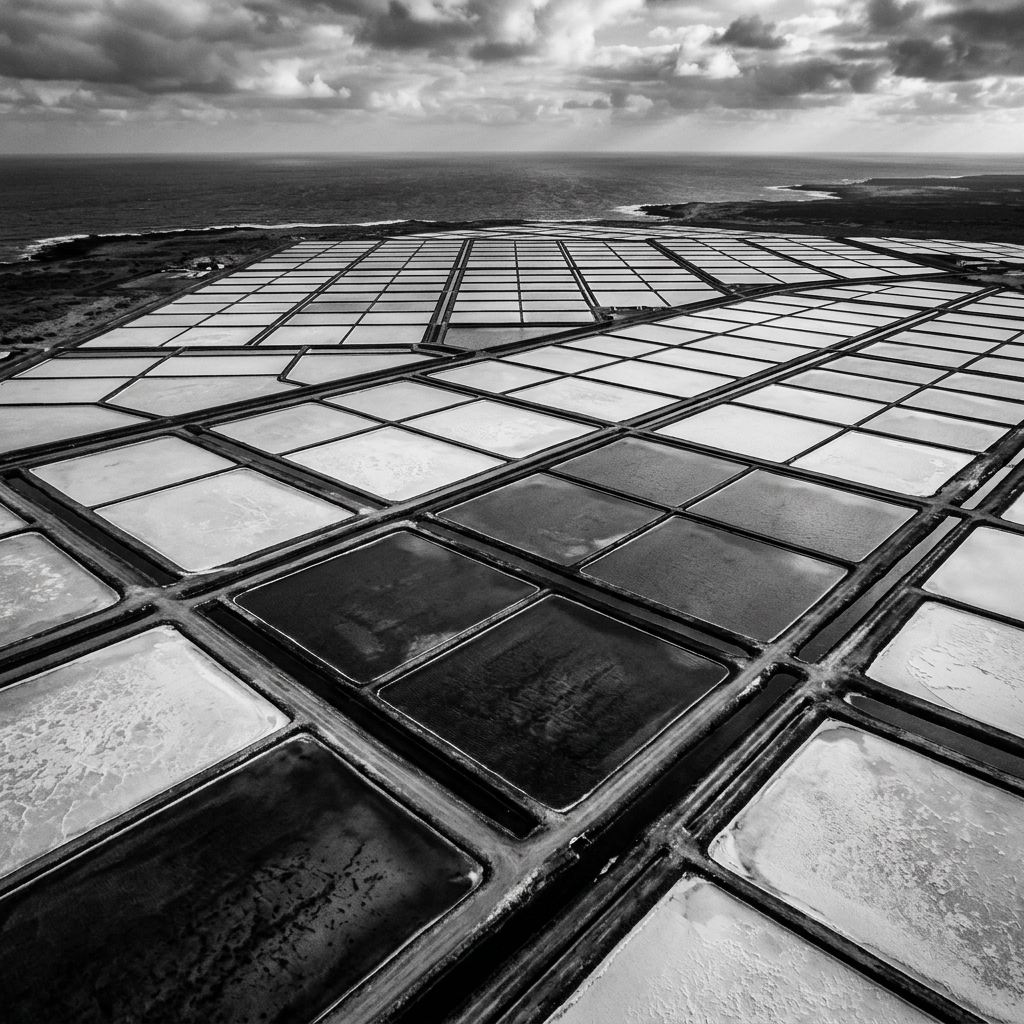
India is the third-largest salt-producing country in the world, with an average annual production of over 30 million tonnes. But how to make salt in India on such a massive scale? The secret lies in a combination of favorable geography, tropical climate, and a mix of traditional and modern harvesting techniques.
1. The Power of Solar Evaporation
The vast majority (over 90%) of salt in India is produced through solar evaporation. This method is highly sustainable and relies on natural elements: the sun and the wind.
- Sea Water: Coastal states like Gujarat (the largest producer) and Tamil Nadu channel seawater into large, shallow artificial ponds called salt pans.
- Sub-soil Brine: In places like the Little Rann of Kutch, underground highly saline water (brine) is pumped to the surface.
- Lake Brine: Inland lakes like Sambhar Lake in Rajasthan provide natural brine for evaporation.
2. The Harvesting Process
Once the brine is in the condenser ponds, the intense Indian sun evaporates the water, increasing the salinity. When the brine reaches a specific density, it is moved to crystallizer ponds. Here, as further evaporation occurs, salt crystals begin to form and settle at the bottom.
Skilled workers (often known as Agariyas in Gujarat) carefully monitor this process. Once a thick crust of salt has formed, it is manually or mechanically harvested and piled into large, iconic white mounds that dot the landscape of regions like Kutch.
3. Washing and Refining
The raw salt harvested from the pans contains impurities and varying levels of moisture. To make it suitable for industrial or edible use, it undergoes a rigorous refining process at state-of-the-art facilities like those operated by Jain Salt Traders.
- Washing: Raw salt is washed with saturated brine to remove dust, clay, and soluble impurities.
- Drying & Crushing: The salt is dried and crushed to achieve the desired particle size.
- Fortification: For edible salt, iodine (and sometimes iron) is added to meet health standards and combat deficiency diseases.
Conclusion
Understanding how salt is made in India reveals a process deeply connected to nature but refined by modern technology. From the vast salt pans of Gujarat to global dining tables, Indian salt represents purity and quality.